
Introduction
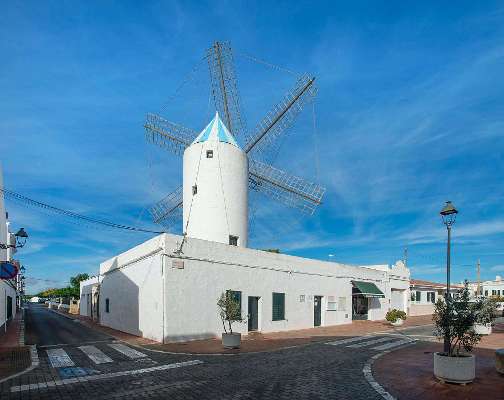
Welcoming, peaceful and serene, Menorca is an island of unique charm and beauty. Over the centuries, diverse cultural influences have bestowed on the island a distinctive character, evident in its landscape today.
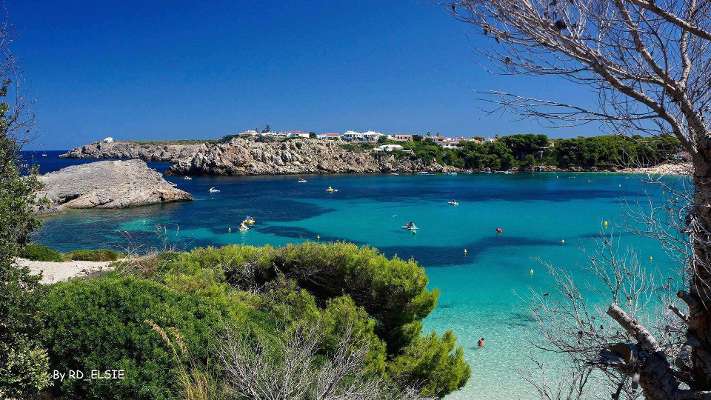
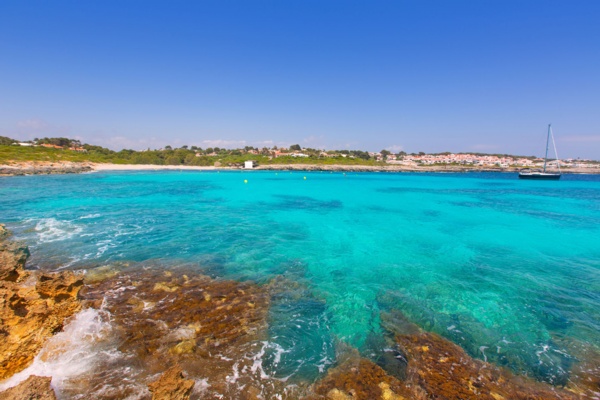
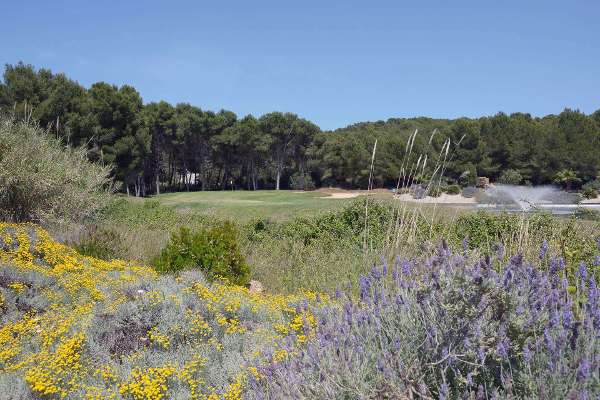
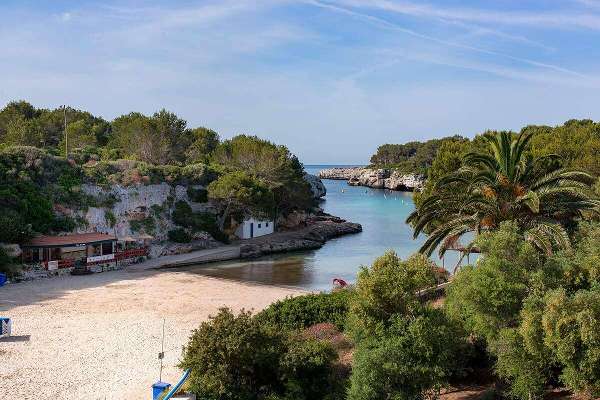
Ancient dry stone walls criss cross fields of green, mysterious stone monuments and burial mounds arouse curiosity, farmhouses with graceful whitewashed arches are glimpsed amongst copses of pine and oak, whilst deep wooded ravines run to white sand bays and onwards into a translucent turquoise sea.
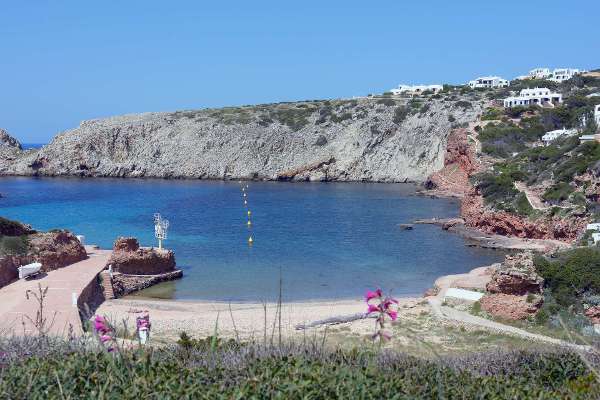
To their immense credit the Menorquins have taken great steps to protect their environment. As a result, the island's mainly natural coastline still offers a remarkable number of virgin fine sand coves to explore. Inland the pace of life is gentle with its feet firmly planted in the past and where time slips by unhurriedly in small towns and villages.
The capital Maó, to the south, rises in a maze of pastel hued houses and intimate squares above a stunning natural harbour. To the north lies some of the loveliest rural scenery, such as the local beauty spot of Ermita de Fátima, whose tiny chapel is popular for weddings.
The picturesque fishing village of Fornells offers the hungry traveller a choice of superb quayside restaurants whilst its sweeping bay is an ideal spot for windsurfers. Further on, the wetlands and nature reserve of S'Albufera teem with birdlife whilst coastal Son Parc offers a golf course and a curved semi rural beach, which is ideal for families.
The countryside between Alaior and the north-eastern coast is ideal walking territory with its backdrop of evergreen carob, olive and fig trees. Look up and you may see birds of prey soaring on warm thermal currents.
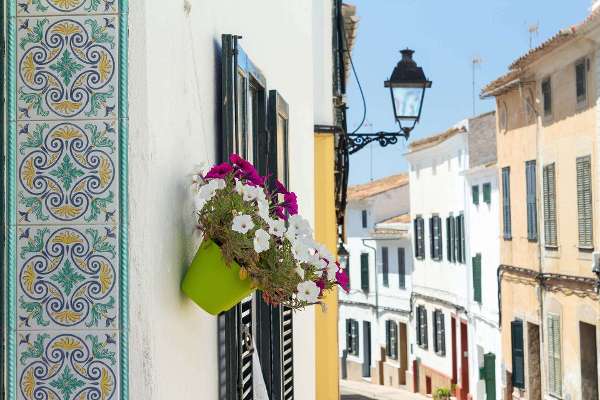
The highest point and geographic centre of the island is Monte Toro (358m) with its magnificent 16th Century monastery perched at its pinnacle offering far reaching views of the entire coastline. Sheltering beneath Monte Toro is Es Mercadal, a pretty whitewashed market town of vaulted alleyways, famed for its gastronomy.
At Ferreries, centre of the footwear and jewellery industries, a handicrafts market can be found in the heart of its 14th Century centre, whilst further south the spectacular gorge of Trebaluger meets the sea at an unspoilt 'cala' (cove).
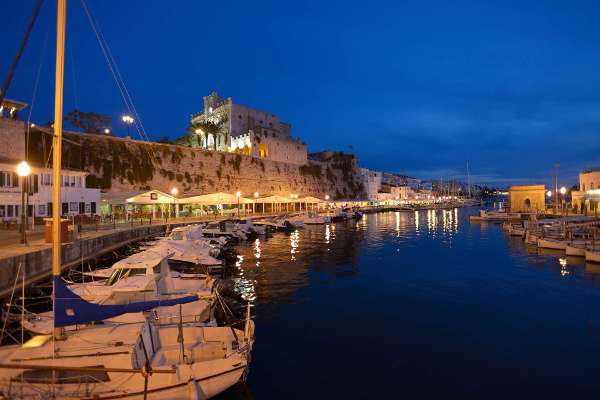
A must see highlight to the western side of the island is the lovely old port of Ciutadella with its sloping fortress wall and ancient fishermen's houses. Spend a day meandering its labyrinthine cobbled streets, feast on a terrace at one of its many fine restaurants,wander stepped alleyways, stately squares and crooked passageways lit by old gas lamps, or simply while away the day at one of its pavement cafés.
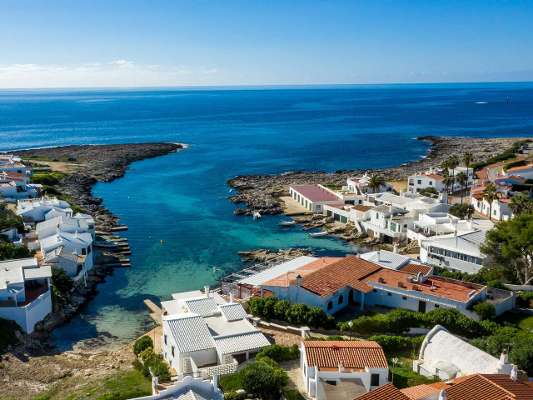
Beyond Ciutadella lie a variety of delightful rural coves including CalaMorell, a sensitively developed local beauty spot with dramatic high cliffs forming a sheltered bay for anchored yachts.
Cuisine
Menorca is famous for the quality and variety of seafood served in its many fine restaurants. Apart from the famous 'calderetas' and Maó cheese, you might wish to try stuffed squid or 'perol' of baked cuttlefish.
'Cabrito' (goat), 'cordero' (lamb) and 'conejo' (rabbit) are all widely available as well as delicious local dishes such as partridge with cabbage or 'arros de la tierra' a simple meal based on ground maize, yams and tomatoes.
Gin, a legacy of the British occupation, is still produced on the island and is often served mixed with lemon squash as a 'pomada'.
Fiestas
Ciutadella: the town comes alive during the celebration of the fiesta of Sant Joan in June. This remarkable medieval spectacle is without doubt one of themost colourful and exuberant celebrations to be held anywhere in Spain. Horses and their riders pack the town streets and squares to joust, parade and perform their traditional 'cargols' or turns.
Maó: the centuries old tradition of horse racing in the street is a spectacular sight that has recently been revived for the town's annual fiesta held in early September.
Alaior: the mid August fiesta of Sant Lorenzo, when horsemen take to the streets, is the highlight of the summer.
Climate
Like all the Balearic Islands, Menorca enjoys a Mediterranean, maritime climate which is normally mild with hot summers, tempered by pleasant breezes. In spite of its small size, the climate in the centre of the island is more extreme than that along the coast.